

62% of Americans Can’t Go 30 Minutes Without Checking Their Phone, New Study Finds
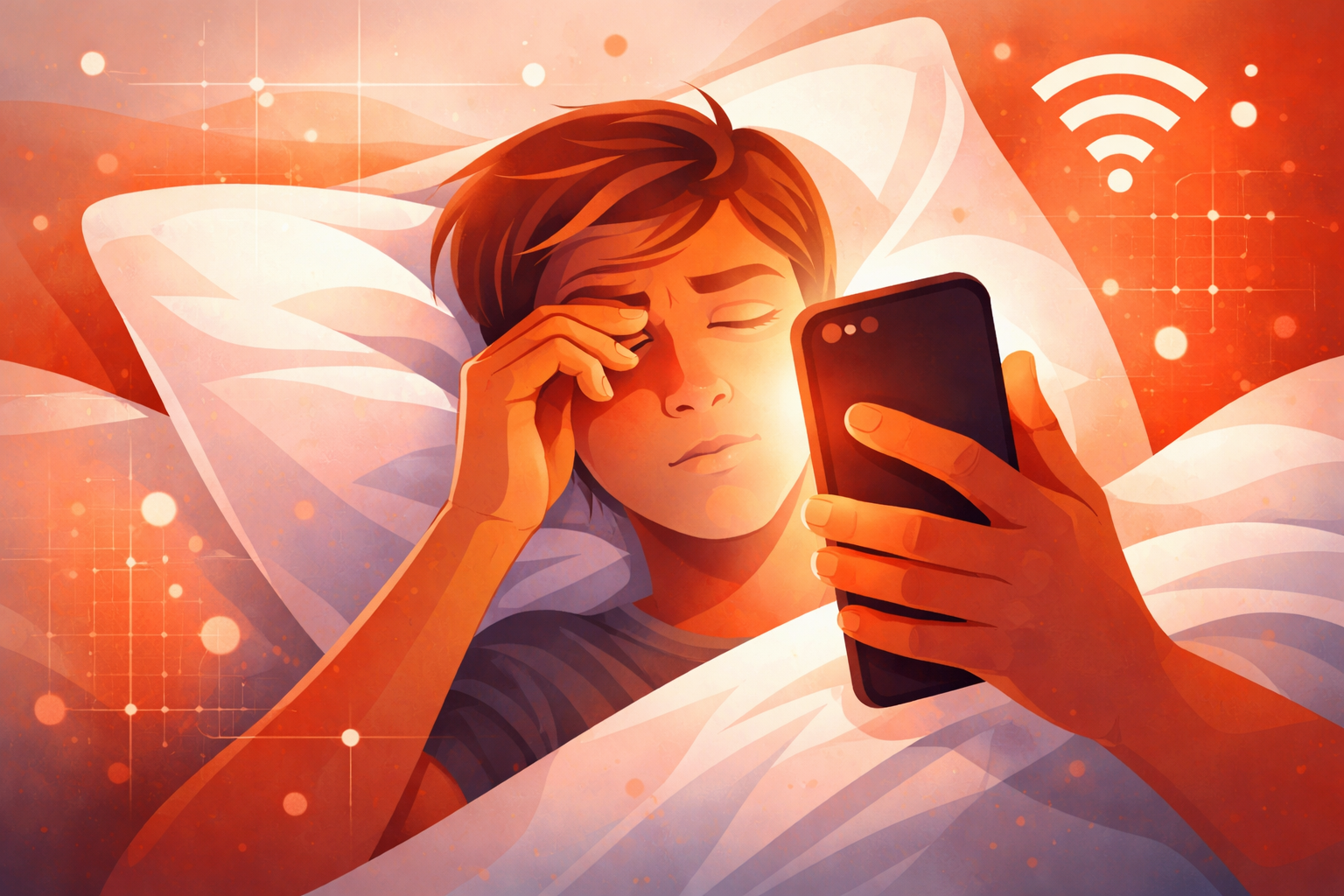
New research from EZContacts finds that 62% of Americans can’t go more than 30 minutes without checking their phone, while 40% report eye strain linked to screen use.
New research from EZContacts reveals how screen habits are affecting Americans’ focus, relationships, sleep, and eye health.
RIDGEFIELD PARK, NJ, UNITED STATES, March 16, 2026 /EINPresswire.com/ -- Smartphones have become nearly impossible for many Americans to ignore. A new study from EZContacts finds that 62% of Americans can’t go more than 30 minutes without checking their phone, highlighting how deeply digital habits are embedded in everyday life.
The survey of 1,000 U.S. adults examined screen habits, phone-checking behavior, social media reactions, and the physical effects of heavy smartphone use.
“The sheer scale of phone usage was staggering,” said Rafael Sarim Oezdemir, Head of Growth at EZContacts. “While we expected to see high screen time, seeing that more than 20% of people spend over eight hours a day on their phones was alarming. It’s also worrying to see that 10% of Gen Z spend over 15 hours a day on their phone. When paired with the reported health effects like eye discomfort, it shows our digital habits are creating a real and escalating public health issue.”
Key Takeaways
• 62% of Americans can’t go more than 30 minutes without checking their phone
• 8% check their phone every 1–5 minutes
• 20% spend more than eight hours per day on their phone, including 6% who exceed 15 hours daily
• 91% check their phone immediately after waking up
• 77% scroll before bedtime, and 24% say it makes falling asleep harder
• 78% report physical or eye-related issues from screen use
• 40% experience eye strain, while 28% report neck pain and 27% headaches
• 26% have canceled plans after getting absorbed in their phone
• 22% say a partner has been upset by their phone use
• 60% support banning social media for children under 16
Americans Are Spending Hours a Day on Their Phones
What begins as a quick notification check can quickly turn into hours of scrolling. The study found that three to four hours of daily phone use was the most common level, reported by 26% of respondents.
Many Americans reported higher screen time. About 20% spend five to six hours per day on their phone, while 13% report seven to eight hours. Gen Z reported the highest usage, with more than 10% exceeding 15 hours daily, while baby boomers were more likely to report one to two hours.
Phone Checking Has Become an Automatic Habit
For many Americans, checking their phone has become a reflex rather than a deliberate action. The study found that 91% check their phone immediately after waking up.
Among them, 36% go straight to social media while 27% check text messages first.
Phone checking continues throughout the day. When trying to focus, 62% say they can’t go more than 30 minutes without looking at their phone. Some check even more frequently, with 21% checking every 15 minutes and 15% checking every 6–10 minutes.
Some respondents also reported experiencing “phantom phone vibrations,” where they believe their phone buzzed even when it didn’t.
Social Media Triggers Both Positive and Negative Emotions
Scrolling through social media often produces mixed emotional reactions. Many respondents reported feeling relaxed or entertained (51%), curious or interested (49%), or inspired (26%).
Negative reactions were also reported, including anxiety or stress (15%), burnout (14%), and worse mood after browsing (11%).
These reactions were especially pronounced among younger users. Gen Z respondents were the most likely to report feeling emotionally exhausted by social media and were more likely to compare themselves with others online.
Heavy Screen Time Is Affecting Physical and Eye Health
Smartphone use is also affecting physical well-being. More than three-quarters of respondents (78%) reported experiencing physical or eye-related issues linked to screen use.
Common symptoms included eye strain (40%), blurry vision (28%), neck pain or “tech neck” (28%), headaches (27%), and dry eyes (26%).
Additionally, 24% reported difficulty falling asleep after scrolling before bed, suggesting nighttime screen habits may disrupt healthy sleep patterns.
For people who spend hours looking at digital screens, using the correct prescription, whether glasses or contact lenses, can help reduce eye strain and improve visual comfort.
Smartphones Are Affecting Relationships and Daily Life
While smartphones help people stay connected, they can also create tension in real-life relationships. More than one-quarter of respondents (26%) say they have canceled plans after getting absorbed in their phone.
Phone use has also caused friction in romantic relationships, including partners upset by phone distraction or asking about social media activity.
Despite these tensions, many people still struggle to disconnect from their devices.
Americans Are Struggling to Disconnect
Even when people try to be present, phones often remain nearby. When asked how they spend their free time, 32% say they try to be present but still use their phone frequently, while 31% say they are usually on their phone during free time.
Only 6% say they fully disconnect from their phone.
Concern about younger generations is also growing, with 60% supporting a social media ban for children under 16.
Expert Perspective: Building Healthier Screen Habits
“Start by looking at your own screen time data,” said Oezdemir. “If most of your time is spent on work or study, that may be reasonable. But if most of it is spent scrolling social media, it may be worth reconsidering those habits.”
He recommends several strategies based on the study’s findings:
• Review your screen time report to understand where your phone use comes from
• Remove or block unnecessary apps, particularly those that encourage endless scrolling
• Keep your phone out of sight while working and turn off unnecessary notifications
• Follow healthy screen habits, such as the 20-20-20 rule: every 20 minutes, look 20 feet away for 20 seconds
• Limit children’s early exposure to smartphones and social media
“With 40% of people reporting eye strain, proactive care is essential,” Oezdemir added. “If you notice changes in your vision, speak with an eye doctor and make sure your prescription is up to date.”
The full study is available here:
https://www.ezcontacts.com/blog/americans-check-phone-every-30-minutes-study-2026/
About EZContacts
EZContacts is an online eyewear retailer offering prescription contact lenses, eyeglasses, sunglasses, and eye care products designed to support everyday vision and digital lifestyles.
Rafael Sarim Oezdemir
Head of Growth, EZContacts
+1 800-217-2020
pr@ezcontacts.com
Visit us on social media:
LinkedIn
Instagram
Facebook
TikTok
Other
Legal Disclaimer:
EIN Presswire provides this news content "as is" without warranty of any kind. We do not accept any responsibility or liability for the accuracy, content, images, videos, licenses, completeness, legality, or reliability of the information contained in this article. If you have any complaints or copyright issues related to this article, kindly contact the author above.
